Rainy Days and Financial Storms: Preparing Your Money for the Unexpected
Rainy Days and Financial Storms: Preparing Your Money for the Unexpected
Life has a way of bringing storms when we least expect them.
Sometimes those storms look like literal rainy days outside your window. Other times they show up as a car repair you didn’t see coming, a medical bill you weren’t planning for, a slow month in business, or a sudden change in employment.
The truth is, financial storms happen to everyone.
The good news is that they do not have to knock you off your feet. With the right mindset, preparation, and small consistent actions, you can build a financial umbrella that keeps you protected when life brings the rain.
At Fearlessly Debt Free, the goal is always the same. To help you take practical steps that strengthen your financial confidence and create long term peace of mind.
Let’s walk through a few powerful strategies that can help you prepare before the storm arrives.

It All Starts with Mindset
Before any financial change can happen, mindset has to come first.
Many people say things like, “I’ll start saving when I have extra money.” The challenge is that most people never feel like they have extra money.
So instead of waiting for the perfect moment, we flip the script.
Start small.
Even something as simple as saving ten percent of every dollar that comes in can create incredible momentum over time.
Think of it this way. If you earn one dollar, ten percent is just ten cents. That means ninety cents is what you live on. The ten cents becomes something different. It becomes money that is set aside for your future wealth and long term goals.
Place that ten percent into a high yield savings account and treat it like it does not exist. It is not spending money, vacation money, or emergency money. It is simply wealth building money.
When you train your mind to think this way, something powerful happens. You begin paying yourself first. That quiet financial confidence begins to grow in the background.
Consistency is what makes the difference. Whether you do it weekly, monthly, or whenever income arrives, the habit becomes the foundation of long term financial stability.
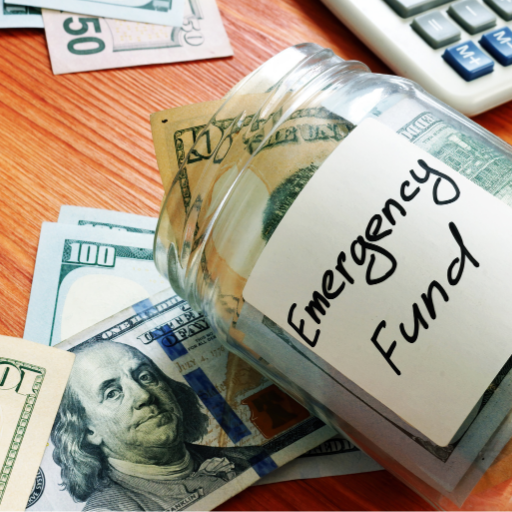
Your Emergency Fund Is Your Financial Umbrella
Saving ten percent builds wealth, but your emergency fund serves a different purpose.
Your emergency fund is your umbrella.
It is the protection that keeps you from getting soaked when the unexpected happens.
Financial professionals often recommend saving three months of income for a single person and six months of income for a household. That fund is there for life’s surprises such as medical expenses, car repairs, temporary job changes, or other sudden costs.
The reality is that many Americans are not prepared for these moments. Studies show that nearly half of Americans cannot cover three months of expenses, and many households struggle to cover even a $500 emergency.
If you find yourself in that position, you are not alone.
The key is to build your emergency fund in layers.
Start with your first goal of $500. Then work toward $1,000. From there, continue building until you reach one month of expenses, then two months, and eventually your full emergency cushion.
Every layer brings greater peace of mind.
Instead of feeling panic when something unexpected happens, you have a safety net already waiting.
When There’s No Extra Money, Expand Your Income
One of the most common concerns people share is this.
“There’s nothing left at the end of the month.”
If that sounds familiar, the answer is not always about squeezing the budget tighter. Sometimes the solution is expanding income instead.
Start by asking yourself a simple question.
What am I really good at?
Take a moment to write down your strengths. Ask friends or family what they believe your talents are. Often the people around us see gifts we overlook.
Today there are countless opportunities for side income through freelancing, tutoring, organizing, consulting, bookkeeping, design work, fitness coaching, technology help, or project support.
You do not need a complicated business plan to begin. Sometimes the most important first step is simply discovering if there is a need for your skills.
And if you are doing work on the side, there may also be potential tax advantages depending on your situation. Speaking with an accountant can help you understand how that might apply to you.
The goal is not to overwhelm your schedule forever. Sometimes temporary effort can create permanent financial stability.
Your Home May Already Be Holding Hidden Money
Another powerful strategy is surprisingly simple.
Look around your home.
Many people are sitting on items they no longer use that could easily be sold through platforms like Facebook Marketplace, Nextdoor, or local selling groups.
Furniture, electronics, décor, clothing, tools, and household items can quickly turn into cash when someone else finds value in them.
In fact, a single weekend of decluttering could potentially create the first $500 for your emergency fund.
Your home may already be holding money that you forgot you had.
This approach not only creates financial progress, it also brings clarity and organization to your living space.
The Truth About Time
Another common concern people share is the lack of time.
Life is busy, and responsibilities pull us in many directions. But when we look closely at how time is actually spent, something interesting often appears.
Research shows that the average adult spends over two hours a day on social media. That adds up to more than eighteen hours per week, and nearly forty hours per month.
Imagine redirecting even a portion of that time toward activities that strengthen your financial future.
Forty intentional hours could mean extra income, progress toward eliminating debt, or building your emergency fund faster.
This is not about guilt. It is about recognizing opportunities.
Sometimes the real shift is not finding more time, but clarifying priorities.

A Simple Recap for Building Financial Security
Preparing for financial storms does not require perfection. It simply requires small consistent steps.
Here are the core strategies we discussed.
First, change your mindset. Financial transformation begins with how you think about money.
Second, save ten percent of every dollar for long term wealth building.
Third, build your emergency fund layer by layer so that unexpected expenses do not derail your progress.
Fourth, explore realistic income expansion using the gifts and skills you already possess.
Fifth, become aware of how your time is spent and look for opportunities to redirect it toward financial progress.
When these pieces come together, something powerful begins to happen.
Consistency builds security.
Security builds confidence.
And confidence changes everything.
Take the Next Step Toward Your Financial Freedom
If any part of this conversation resonated with you, it may be the perfect moment to take your next step.
One of the most powerful ways to gain clarity around your finances is through a Fearlessly Debt Free Discovery Call. During this conversation, we explore your specific situation and discuss strategies that can help you move forward with greater confidence.
At the moment, these Discovery Calls are still complimentary, although that may change in the future as scheduling becomes more limited.
If you have been thinking about making a change in your financial life, now may be the perfect time to begin that conversation.
Because here at Fearlessly Debt Free, making Big, Bold Moves toward your financial freedom allows you to live a truly Abundant Life.
And remember, the goal is not to avoid every storm.
The goal is to be prepared when it comes.
Be the sunshine, even on rainy days.

Action is where everything shifts. Here are the clear, simple steps to take starting today.
Make the decision
Commit to preparing for financial storms instead of reacting to them. Say it out loud if you need to. I am building stability.Shift your mindset
Replace “I’ll save when I have extra” with “I save first.” Decide that saving is not optional, it is foundational.Start the 10 percent habit
Automatically move 10 percent of every dollar earned into a separate high yield savings account.
Do not touch it. Do not repurpose it. Let it quietly grow.Open or designate two separate savings accounts
One for long term wealth building
One for your emergency fund
Keep them mentally and physically separate.Set your first emergency fund goal
Start with $500.
Then move to $1,000.
Then one month of expenses.
Then build toward three to six months.Build in layers
Increase your emergency fund gradually. Every layer equals more peace.Identify one income expansion idea
Ask yourself, what am I good at?
Write down five strengths.
Circle one that could generate income.
Take one small step this week toward exploring it.Sell one category of unused items
Choose a drawer, a closet, or one room.
List items for sale on Facebook Marketplace or another local platform.
Apply all proceeds directly to your emergency fund.Track your time for one week
Notice how many hours go to social media or low value activities.
Reclaim even 3 to 5 hours for income producing or financial organizing activities.Automate consistency
Set up automatic transfers for savings.
Schedule one weekly 20 minute “money check in” with yourself.Remove emotion from the numbers
Look at money as a tool.
Review your bank accounts and balances without judgment, only awareness.Schedule your Discovery Call
If you want structure, strategy, and accountability tailored to your situation, book your Fearlessly Debt Free Discovery Call and take your next bold step.
Small steps. Consistent action. Layered security.
That is how you prepare for the storm and build real confidence.
Lisa-Marie Hintze, Host of Big, Bold Move; Abundant Life

This article is brought to you by Fearlessly Debt Free,
where eliminating ALL Debt in ½-⅓ of the time for ½-⅓ of
what you owe is more possible than you may think.
Schedule your Discovery FREE Call today and receive
your customized FREE Analysis (Valued at $250).
Fearlessly Debt Free Booking Page